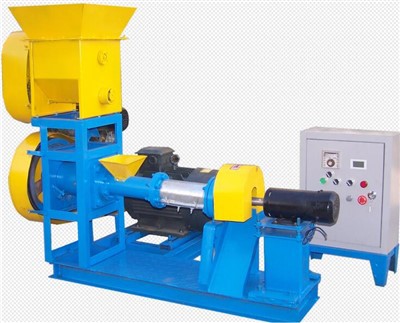


Introduction to fish feed manufacturing plant
Fish feed is an essential component in the aquaculture industry. The industry mainly depends on feed pellets to achieve the desired weight and size of fish. Fish feed manufacturing plant is designed to produce high-quality feed pellets that contain all the essential nutrients required for healthy fish growth. Most of the plants have advanced features that enable them to produce feed pellets that float, which is an essential characteristic for fish that prefer to feed on the water surface.

Working principle of fish feed production plant
The fish feed production plant operates on a simple principle of mixing all the ingredients together in a specific ratio. The ingredients usually include various cereals, vegetable proteins, fish meal, vitamins, and minerals. Once the ingredients are mixed, they are then passed through a grinder that reduces them to fine particles. The particles are then moved into the mixer again, where water is added to form a paste-like consistency. The paste is then compressed into pellets using a pelletizer. The pellets are then dried and cooled before being packaged into bags for sale.

Which animals are feed pellets suitable for?
Fish feed pellets are suitable for various aquaculture species, including fish, crabs, prawns, and shrimps. The pellets provide a balanced diet that ensures healthy growth and development of the animals. Additionally, the pellets are designed to float, which is ideal for fish that feed at the surface.
What are the parameters of the machine?
The fish feed production plant comprises several machines that work together to produce high-quality feed pellets. The parameters of the machine mainly depend on the production capacity. The machines have various operating parameters like the size and shape of the pellets, throughput rate, power rating, and energy consumption rate. Other factors that influence the parameter include the type of ingredients used, the moisture level of the feed, and the level of automation.
Quality control process for our machines
Quality control is an essential process in the production of fish feed pellets. The quality of the pellets mainly depends on several factors, such as the type and quality of ingredients used, the accuracy of the weighing and mixing process, and the level of hygiene maintained during the production process.
At our manufacturing plant, we have implemented strict quality control measures. We source our ingredients from reputable suppliers, and our machines are designed and installed by experienced professionals. Additionally, we have a team of quality control experts who monitor the production process to ensure that the pellets meet the required standards.
How to make an order for fish feed production plant?
Making an order for a fish feed production plant is a simple process. First, you need to identify a reputable supplier who can design and install the plant according to your specific requirements. You can conduct an online search, visit trade fairs or exhibitions, or ask for recommendations from professionals in the aquaculture industry.
Once you have identified a supplier, you need to provide them with the details of your requirements, including the production capacity, the type of feed pellets, and the automation level. The supplier will provide you with a quote, which should include the price of the plant, installation cost, and any other additional costs like shipping and taxes.
In conclusion, fish feed manufacturing plant is an essential plant that is used in the production of high-quality feed pellets for fish. The plant operates on a simple principle of mixing the ingredients together in a specific ratio and forming them into pellets. The pellets are then dried and cooled before being packaged into bags for sale. When making an order for the plant, it is essential to choose a reputable supplier who can design and install the plant according to your specific requirements. Additionally, quality control is an essential process in the production of fish feed pellets, and it should be implemented from the sourcing of ingredients to the packaging of the pellets.
Model | WSJY-40 | WSJY- 50 | WSJY-60 | WSJY-70 | WSJY-80 | WSJY-90 | WSJY-120 | WSJY—135 | WSJY-160 | WSJY-200 |
Capacity --- kg/h | 30-40 | 60-80 | 120-150 | 180-250 | 300-350 | 400-450 | 500-700 | 800-1000 | 1200-1500 | 1800-2000 |
Pelleting Diameter--- mm | 1-8 | 1—8 | 1 —10 | 1-10 | 1 —10 | 1 —10 | 1-10 | 1 –12 | 1-12 | 1-12 |
Motor Power--- kw | 5 | 7.5 | 15 | 18.5 | 22 | 37 | 55 | 75 | 90 | 132 |
Cutting Power--- w | 400 | 400 | 400 | 400 | 1100 | 1500 | 2200 | 2200 | 2200 | 3000 |
Screw Rod Diameter-- mm | 40 | 50 | 60 | 70 | 80 | 90 | 120 | 135 | 160 | 200 |
Cooking degree | >95% | >95% | >95% | >95% | >95% | >95% | >95% | >95% | >95% | >95% |
Size(m) | 1.4*1.03*1.1 | 1.45*1.08*1.25 | 1.46*1.14*1.25 | 1.6*1.4*1.35 | 1.6*1.4*1.35 | 2.1*1.45*1.35 | 2.1*1.45*1.35 | 2.55*2.05*1.65 | 2.9*2.65*1.8 | 3*2.85*1.9 |
Weight(kg) | 260 | 350 | 355 | 580 | 700 | 950 | 1700 | 1900 | 3600 | 4300 |
Hot Tags: fish feed manufacturing plant, China fish feed manufacturing plant suppliers, factory, Feed Pellet Line