



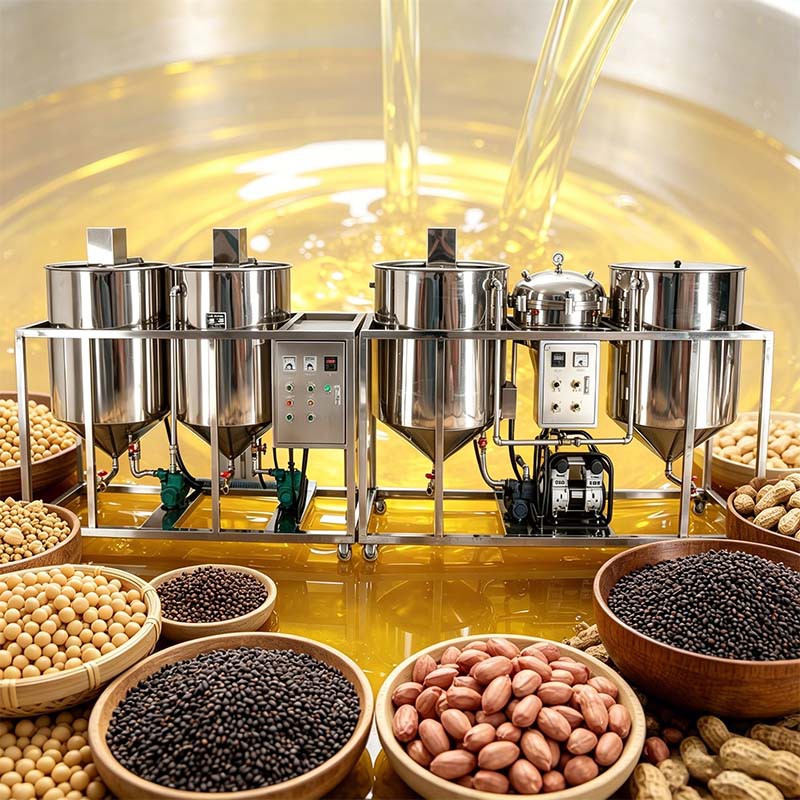


What is a cooking oil refinery machine?

Look, our edible oil refining machine isn't some flashy prototype. It's a purpose‑built system that takes crude oil and pushes it across the finish line-fully compliant with national standards. You get degumming, dehydration, and decolourisation rolled into one integrated train. But here's the craft: we marry physical and chemical refining in the same pass. The physical leg (steam stripping under deep vacuum) cuts down on chemical waste; the chemical leg (acid or alkali dosing) handles stubborn gums and trace metals. That hybrid approach? It's what makes the unit deadly versatile-from a small oil mill running batch after batch, right up to a food processing plant feeding continuous lines. Real‑world operators love the low upfront bite and the fact that payback comes fast, which is exactly why buyers across the globe keep coming back to this machine when they need to turn rough crude into clean, market‑ready oil without burning capital.
|
Name |
LYJ-0.5t |
|
Overall Dimensions(mm) |
3900*830*1550 |
|
Self-priming pump |
3*0.75kw/220v |
|
Number of mixing tanks |
3 |
|
Heater |
9*3kw |
|
Handling Capacity |
400-600KG/D |
|
Weight of Complete Machine |
350kg |
Got a different requirement for this machine? Maybe you need a bigger daily throughput, a switch from steam to thermal oil heating, or a more granular automation setup. Then reach out. We don't just claim customisation-we actually build to your spec: the exact processing capacity, the right heating jacket, the control logic you want. Tell us your parameters and model number; we'll cut the steel, fit the flanges, and deliver a machine that runs precisely to your numbers.
Why It's Worth Buying
Strips out the deal‑breaking flaws that keep crude oil off the compliant market
You know what fails a shipment? High acid value, off‑spec phosphorus, or a cloud of wax. This machine nails those one by one-so your oil clears the customs test every time.
Lifts your selling price significantly
Grade 3 to Grade 2 alone can add 15–20% to the ticket. Grade 2 to Grade 1? Even more. Cut your refining losses by 2–3% and watch bottom‑line profits climb fast.
Extends shelf life from weeks to months
Proper deodorisation and dewaxing kill the triggers of rancidity. Instead of dumping returned oil, your customers move inventory without spoilage.
Runs on multiple feedstocks without a retool
Soy, rapeseed, sunflower, palm-even rice bran. Just tweak the degumming dose or the deodorization temperature. Same machine, different crude.
Reduces kitchen hazards like smoke and spatter
Low smoke point equals angry cooks and hood fires. Polish the oil right, and your customers' clients notice the difference. Repeat orders follow.
Low entry cost, quick payback
A three‑tank batch setup costs less than a used truck. Yet the ROI window? Many operators see it closing within six months. Scale up later. Start clean now.
What materials are applicable?
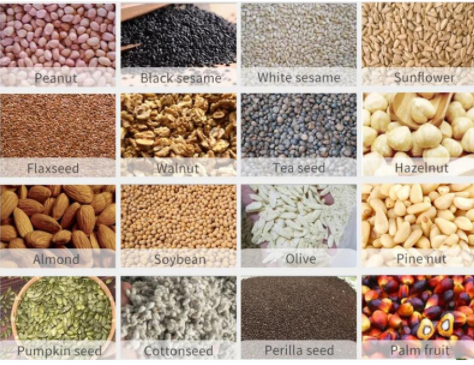
This machine chews through just about any crude oil you throw at it-seed origin doesn't matter.
I. The usual suspects (mainstream volume):
Rapeseed, peanut, soybean, corn, sunflower, cottonseed, sesame, flaxseed, and perilla.
II. The high‑margin tier (specialty oils):
Camellia (tea seed), walnut, olive, peony seed, almond, Sichuan pepper, tung seed.
Pressed or solvent‑extracted crude? Both work.
With pressed oils, you watch for higher phosphatides; with solvent‑extracted oils, you chase out residual hexane in the deodorizer. Same machine, different tweaks to your heating curve and vacuum dwell. Every single type above refines cleanly-if you know the small adjustments.
What does the finished product look like?

Look at the finished oil coming out of this cooking oil refinery machine. It's brilliantly clear-hold a bottle up to the light, and you'll see zero sediment, not a hint of haze. Why? Because the dewaxing chill killed off those wax esters, and the degumming stripped every last phospholipid. Taste it? Dead neutral. No grassy notes, no fishy tang, no stale aftertaste-that's what a properly dialled deodorizer (think 240 °C under 3 mbar) buys you.
If you heat it up, there's no foam. That means your free fatty acids are safely below 0.05%. Only a wisp of smoke, because the smoke point has been pushed past 200 °C. And shelf stability? Months without going rancid, thanks to thorough drying (moisture under 0.1%) and bleaching that yanked out pro‑oxidant metals. This isn't just premium, health‑conscious oil. It's legally marketable, commercial‑grade, refined oil, ready for a supermarket label.

What are the main features?
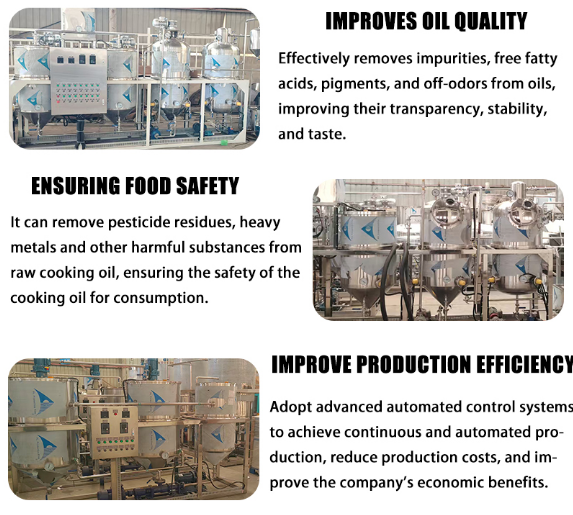
Built from food‑grade stainless steel, this equipment offers outstanding corrosion and heat resistance, fully meeting national food machinery standards. It integrates degumming, dehydration, and decolorization into one system, removing impurities and harmful substances through both physical and chemical refining methods. The machine is highly versatile, suitable for oil mills and food processing plants alike. With low investment costs and strong returns, it's an ideal choice for clients worldwide who need to refine crude oil.
What are the primary application scenarios?
Edible oil refining machinery boasts a wide scope of application and is suitable for settings of all sizes, from small-scale retail workshops, mid-sized grain and oil mills, and high-end specialty oil processing facilities, to catering distribution centers, animal fat processing plants, and overseas manufacturing sites. Versatile across every scenario, it serves as essential equipment for enhancing product quality and boosting revenue in the oil processing industry.

What are these jars, and how do we use them?

Related Machinery and Production Lines

The whole workflow is dead simple:
Clean the seed → roast & dry → press → coarse filter → refine (multi‑tank) → fine filter → store & bottle
But here's what the manual won't tell you: skip a cleaning step and your press wears out in half the time. Rush the roasting, and your crude oil's acid value spikes. And those conveyors? They always clog at the bends if you don't clean them weekly.
Bottom line: from a small workshop running two tons a day to a mid‑sized mill pushing fifty, this lineup works-as long as you respect the order.
Our company, Lerford, has the complete set of equipment mentioned above in stock and available for immediate supply. We welcome you to send an inquiry at any time to quickly receive a detailed quotation and solution proposal.
Choose Lerford: Your Direct-from-Source Manufacturer
When selecting edible oil processing equipment, choosing the Lerford brand for your refining machinery offers a multitude of core advantages-encompassing equipment quality, customization services, and production costs, as well as after-sales support and long-term profitability. We comprehensively address the production requirements of small, medium, and large-scale oil mills and grain-and-oil processing plants, empowering our clients to consistently produce high-quality, compliant finished oils.

Summarize
Look, you don't need to babysit a dozen separate tanks anymore. This cooking oil refinery machine stacks degumming, deacidification, decolorization, and deodorization into one integrated skid. Hit the start button-yes, just one button-and the PLC takes over: dosing acid for gum removal, neutralizing free fatty acids, injecting bleaching earth, then ramping up steam temperature under vacuum to strip every last off‑flavor. What do you get? Crude oil stripped clean, transformed into a brilliantly clear, oxidatively stable finished oil that sails through commercial specs. No fiddling with valves, no guessing when to switch stages. Just a PLC, a few preset recipes, and a final product that holds up on the shelf. Interested? Give us a call-we'll walk you through the cycle times.
Hot Tags: cooking oil refinery machine, China cooking oil refinery machine suppliers, factory


