



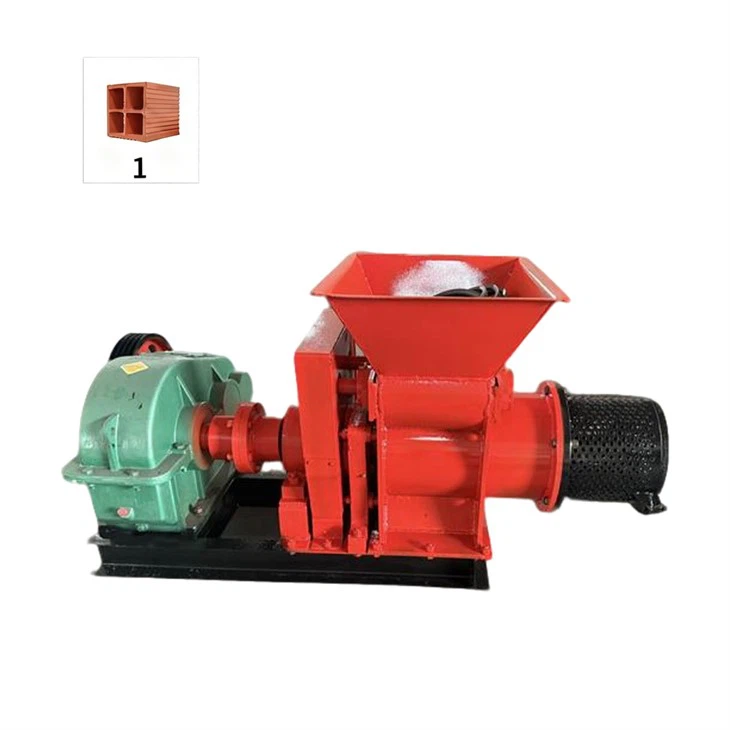


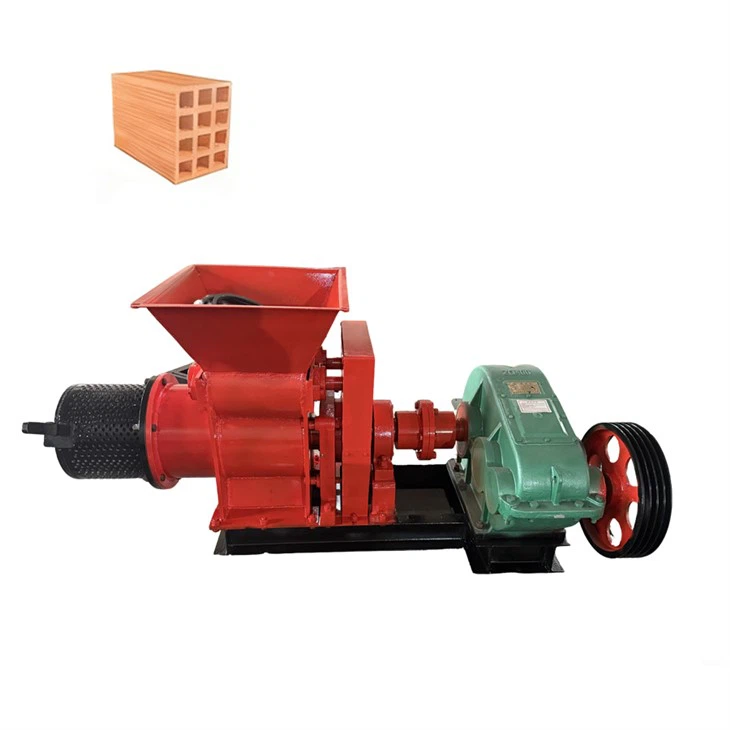


Today, we'll mainly introduce the clay mixing machine. A clay mixing machine is a mechanical device used for "refining" clay materials and also serves as preparation for automatic clay brick machines. It goes far beyond simple mixing and stirring; it's a precise process involving kneading, rolling, extruding, and pressing to homogenize, plasticize, degas, and densify plastic raw materials used in the ceramics and brick industries. If raw materials are the "flesh and blood" of the industry, then the clay mixing machine is the core equipment that shapes its "bones" and "soul."

I. Core Functions The function of the clay mixing machine is a systematic project, mainly reflected in the following aspects:
Uniform Mixing:
It powerfully mixes and kneads raw materials of different compositions and moisture levels (such as kaolin, clay, quartz, feldspar, etc.) as well as recycled waste bricks and waste clay. Through the propulsion and extrusion of the spiral blades, it ensures that moisture and particles are evenly distributed throughout the batch of clay, eliminating any unevenness in moisture content or composition, providing a stable physicochemical basis for subsequent molding.

The core added-value function of the vacuum ply mill lies in its vacuum degassing and plasticizing optimization capabilities. During the extrusion process, the vacuum system connected to the equipment operates continuously, forcibly expelling air bubbles trapped within the ply. This effectively prevents defects such as cracks, bulges, deformation, and structural loosening caused by thermal expansion of these bubbles during subsequent drying or firing processes, significantly improving the product's density, yield, and final strength. Simultaneously, the equipment uses powerful mechanical extrusion and shearing forces to break down the original disordered arrangement of flaky particles in the ply, directing them to a directional distribution along the flow direction. This process greatly optimizes the plasticity and binding force of the ply, resulting in superior ductility and shape stability during subsequent drawing, extrusion, or compression molding, making it less prone to cracking or collapse.

Stone Removal Function: The equipment features a built-in high-efficiency stone removal mechanism that automatically separates hard foreign objects, such as stones and metal impurities, from the raw materials during material conveying and kneading. This reduces the risk of equipment failure and ensures that the bricks and tiles are free of internal impurities, improving product strength and appearance qualification rate.

Applications and Significance of Automatic Clay Brick Machine:
Clay mixers are an indispensable "pre-treatment core" in the ceramics industry (such as daily-use porcelain, architectural and sanitary porcelain, and electrical porcelain), the brick and tile industry, and the refractory materials industry.
For the ceramics industry, it determines the molding performance of the porcelain blank and the quality of the final porcelain. A perfect piece of porcelain is determined from the moment the clay is processed in the clay mixer.
For the brick and tile industry, it ensures the strength and density of the brick blank, directly affecting the compressive strength, flexural strength, and durability of the finished product.

Raw Materials:
Kaolin:
Function: Known as the "skeleton of porcelain," it is the most important raw material in porcelain production.
Characteristics: Pure texture, moderate plasticity, high refractoriness (up to 1700℃ or higher). It is white after firing and chemically stable.
Function: Ensures the whiteness, chemical stability, and high-temperature strength of the porcelain blank.
Clay:
Function: The most widely used plastic raw material, it is the core of brick, tile, pottery, and porcelain formulations.

Production Line Introduction
In industries such as ceramics, bricks, and refractory materials, a complete plastic molding production line is like an industrial assembly line. Its core objective is to transform various raw materials into qualified blanks with uniform specifications and dense structure through a series of precise processes. The four key pieces of equipment on this production line-the integrated crushing and mixing machine, the mud-mixing machine, the vacuum clay brick machine (or vacuum extruder), and the cutting machine-each perform their respective functions and work together to complete this transformation.

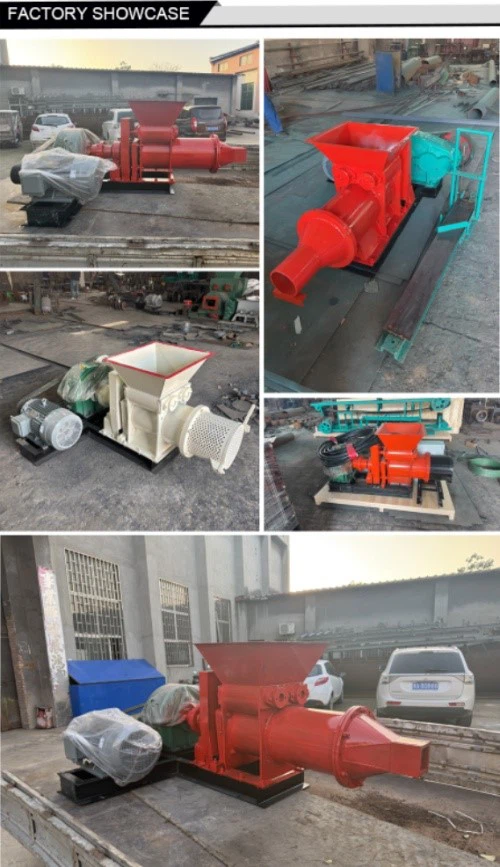
Factory Showcase of an automatic clay brick machine
In our own production workshop, multiple vacuum plywood machines have been assembled and debugged, ready for shipment in the finished product area. These are not just concepts on blueprints, but mature equipment that has undergone our rigorous quality inspection and is ready to be put into your production line at any time. Key indicators you care about, such as vacuum degassing efficiency and extrusion stability, can all be verified on-site here.
We understand that production efficiency is crucial; therefore, we maintain a sufficient stock of core equipment. From order placement to delivery, we can minimize waiting time, ensuring your project can start quickly and seamlessly.
Our address
No.10th, Yulan Road, High-Tech Industrial Development Zone, Zhengzhou City, Henan Province, China
Phone Number
+86-371-55960109
+8615838007835
goldenmachinerysusan@gmail.com

|
Model
|
SDJX 300
|
|
Motor power
|
15kw
|
|
Dimension
|
1.8*0.9*1m
|
|
Weight
|
0.65t
|
Hot Tags: automatic clay brick machine, China automatic clay brick machine suppliers, factory, Coal Briquette Machine, Briquette Press, por briquette machine, manure briquette machine, Charcoal Briquette Machine, Orange Washing Waxing Drying Machine


