


Zhengzhou Lerford Machinery Equipment Co., Ltd. is one of the most reliable manufacturers and suppliers of bamboo products in China. With abundant experience, we warmly welcome you to buy advanced bamboo products for sale here from our factory. Quality products and low price are available.
Key Features of Bamboo products:
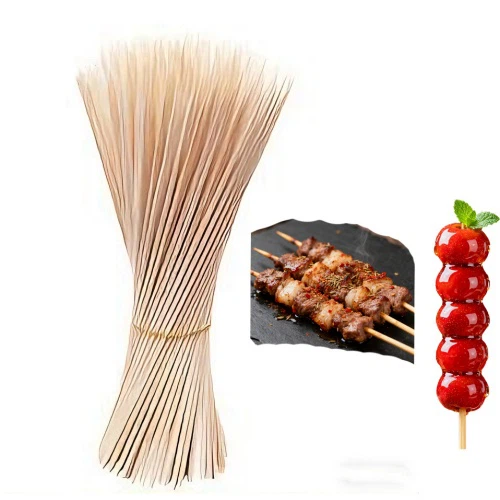
Bamboo skewers have become the dominant choice due to bamboo's unparalleled natural advantages:
Excellent Hardness and Toughness: The dense structure of bamboo fibers makes skewers both hard and flexible. They pierce food easily without breaking like wooden skewers, and can withstand repeated turning, especially during grilling.
Natural Antibacterial Properties: Substances within bamboo inhibit bacterial growth, a significant hygiene advantage for skewers that come into direct contact with raw meat.
Good Thermal Stability: Bamboo conducts heat evenly and is heat-resistant. It does not easily produce toxic substances when grilled over an open flame, nor does it melt or deform like some plastics.
Delicate Aroma: Bamboo skewers possess a subtle, herbal aroma that complements the natural flavor of the food.

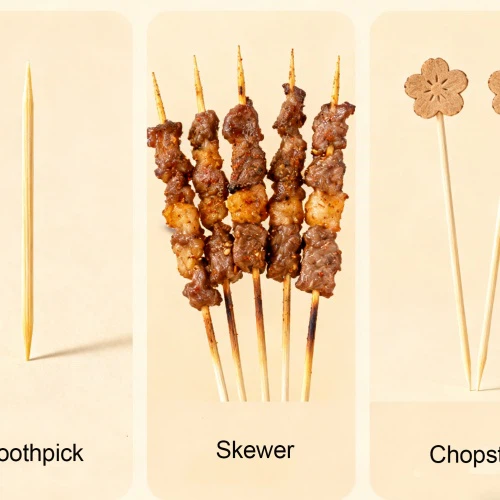
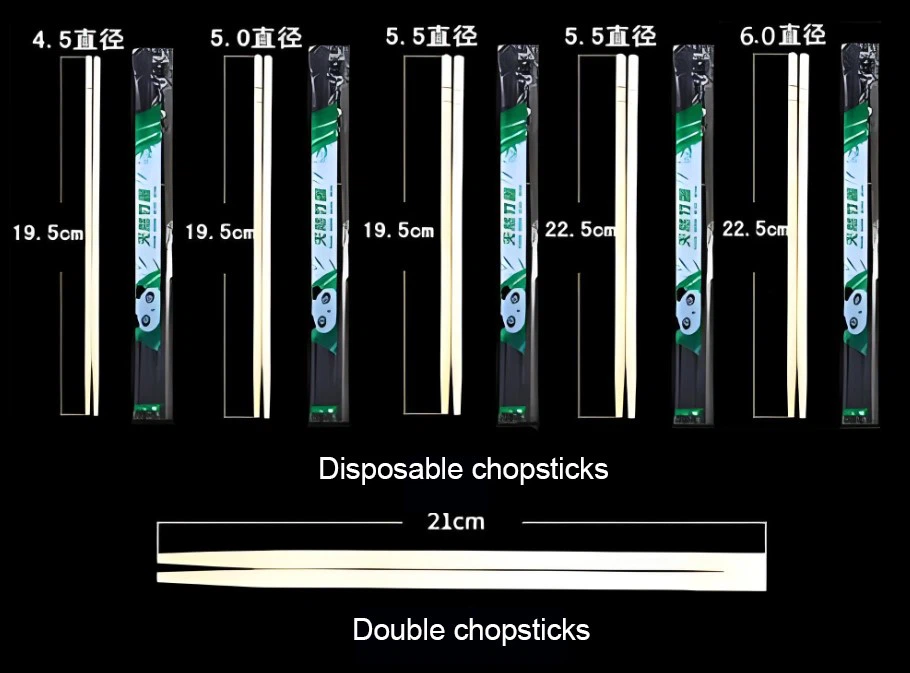
Bamboo chopsticks come in a variety of shapes, each with its own purpose:
Long chopsticks (20-30 cm): The king of barbecue. The soul of grilled lamb skewers, chicken wings, and vegetables. Moderate length, comfortable grip, less risk of burns, and can hold a suitable amount of food.
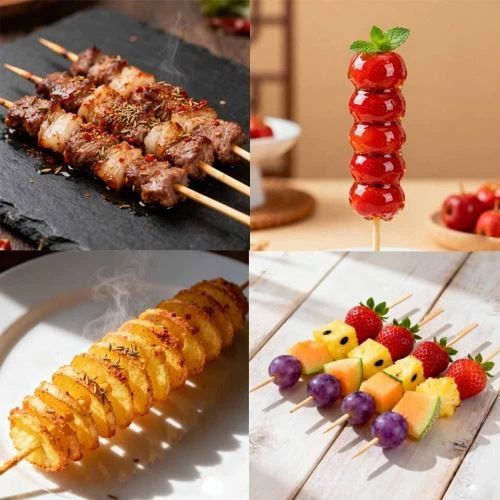
Short chopsticks (10-15 cm): An elegant partner for snacks and desserts. Commonly used for candied hawthorn skewers, oden, glutinous rice cakes, and toothpick meat. Short and compact, easy to pick up and eat.
Extra-long chopsticks (50 cm and above): A symbol of banquets and luxury. Often used for grilled whole fish, large skewers of meat, or decorative fruit skewers at cocktail parties, creating a strong visual impact.
Bamboo Product Manufacturing Process
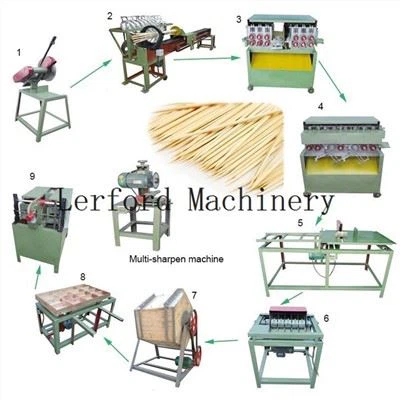
1. Select robust, mature bamboo with thick walls and long internodes, cut it into sections, and then split it into evenly sized strips.
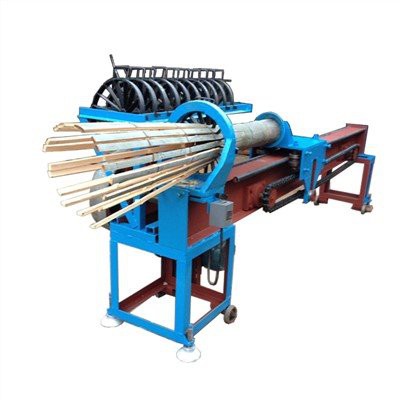
2. Pass the bamboo strips through a mold with specific apertures, forcefully pulling and shaping them into uniformly thick cylindrical sticks. This is a crucial step in determining the diameter of the skewers.
3. Use a rotating blade to shape one end of the bamboo stick into a uniform and sharp conical shape. The angle and smoothness of the tip are critical, directly affecting the user experience.
4. A high-speed polishing wheel or roller removes all burrs, making the skewers smooth and preventing splinters from pricking your hands.

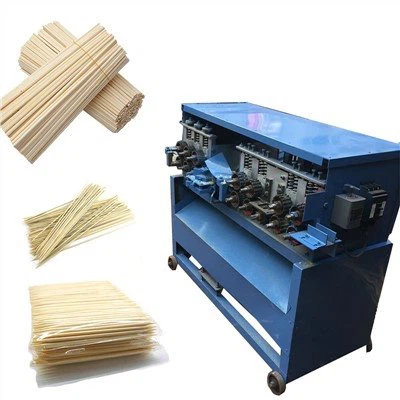
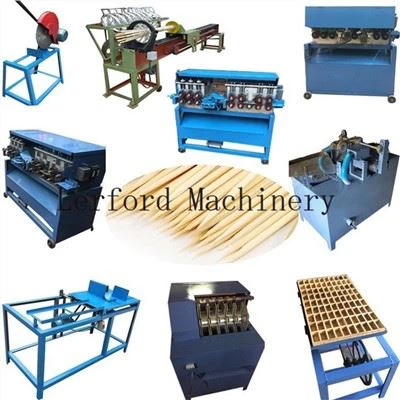
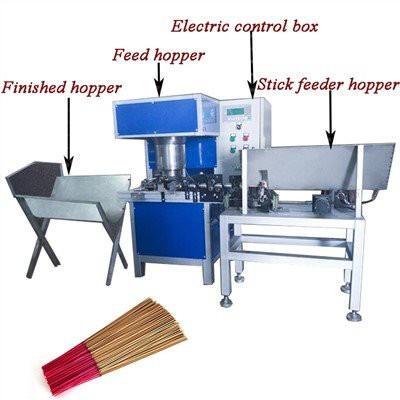
Friendly Reminder: Our company mainly sells toothpick processing machines and chopstick production machinery, primarily small to medium-sized machines. Please feel free to contact us with any needs; we will be happy to serve you.
Disposable tableware, with its short-lived yet convenient mission, serves as a staple for modern people's meals and drinks.

faq of Bamboo products
Q: What is the correct way to use a toothpick?
A: The correct method is to gently slide the toothpick into the side of the gap between your teeth at a 45-degree angle, keeping it close to the tooth surface, and slowly removing food debris from the gum line towards the crown. Be sure to be gentle to avoid pricking or tearing your gums.
Q: What are the disadvantages of frequently using toothpicks?
A: Long-term, rough use of toothpicks may lead to:
Wider gaps between teeth: Forcing food into the gaps can compress the gums and teeth, potentially widening the gaps over time.
Gum damage: The sharp tip can easily injure the gums, causing bleeding, inflammation, and even gum recession.
Oral infections: If the toothpick is not clean or creates wounds, it may cause infection.
Q: Can toothpicks replace dental floss?
A: Absolutely not. Dental floss removes plaque from between teeth more thoroughly and is far less damaging to teeth and gums than toothpicks. Toothpicks are better suited for removing larger food debris, while dental floss is an essential part of daily oral hygiene.
Q: What's the difference between bamboo and wooden toothpicks?
A: Bamboo toothpicks: More common, harder, more flexible, less prone to breakage, and bamboo naturally has antibacterial properties.
Wooden toothpicks: Usually made of birch, poplar, etc., they may be slightly softer, but quality depends on the wood and craftsmanship.
Q: How to identify bleached, low-quality toothpicks?
A: Look and smell:
Look at the color: Avoid choosing toothpicks that are snow-white or overly uniform in color. High-quality bamboo or wooden toothpicks should be a natural pale yellow or light brown.
Smell the odor: A pungent, acidic, or chemical smell likely indicates sulfur fumigation and bleaching; do not use these.
Q: Are toothpicks environmentally friendly?
A: As disposable items, excessive use can put pressure on the environment. However, because their main components are bamboo and wood, which are biodegradable, they are more environmentally friendly than plastic products. The key is to reduce unnecessary use and dispose of them properly.
Q: What are some better alternatives? A: Modern oral care offers many better options:
Dental floss: The preferred tool for cleaning between teeth, efficient and safe.
Water flosser/oral irrigator: Uses the force of water to clean thoroughly while being very gentle on gums.
Interdental brush: For people with larger gaps between their teeth, it cleans better than dental floss.
Q: What are some unexpected uses for toothpicks in daily life?
A: Toothpicks are helpful in household life, for example:
Kitchen: To test if a cake is baked; to poke holes in corn, sausages, etc., to prevent them from bursting.
Cleaning: To clean hard-to-reach corners such as keyboard crevices and electrical outlets.
Crafts: As an auxiliary material or decorative tool in model making.
Gardening: To provide support for small seedlings.

We focus on providing high-performance small-to-medium-sized machinery solutions for various industries. We deeply understand that the research, development, testing, and demonstration of equipment continuously produce a large number of samples and finished products.
Therefore, we have pioneered an innovative "machinery and finished product co-sales" model. Take our bamboo products (such as bamboo chopsticks and skewers) as an example; they are not merely commodities, but also "silent proof" of our machinery's performance. Each smooth, uniform bamboo skewer directly reflects the superior craftsmanship, stable output, and outstanding efficiency of our bamboo skewer machinery.
Through this approach, we not only allow customers to verify the quality of our machinery firsthand, transforming abstract specifications into tangible, high-quality products, but also fulfill our environmental commitment by converting samples from the production process into valuable products, effectively reducing resource waste and creating dual value for customers and society.
In short, we sell the value-creating machinery and also share the high-quality finished products directly produced by these machines. This is not just a business transaction, but a practice of quality, transparency, and sustainability.

As a manufacturer providing small and medium-sized machinery for various industries
| Product Name | Carbonized Bamboo Skewers | ||||||||
| Material | 100% bamboo | ||||||||
| Color | carbonized | ||||||||
| Usage | restaurant , hotpot , camping , picnic , party , BBQ accessories | ||||||||
| Diameter | 2mm, 2.5mm, 3mm, 3.5mm, 4mm | ||||||||
| Length | 12cm, 15cm, 18cm, 20cm, 25cm, 30cm | ||||||||
| Feature | disposable, sustainable, stocked, eco-friendly, polishing, not coated, soak in water for 5 minutes to prevent burning, The sharp ends are perfect for loading with meat and vegetables | ||||||||
Hot Tags: bamboo products, China bamboo products suppliers, factory, Incense Stick Making Machine, Bamboo Stick Making Machine, Toothpick Machine, Chopstick Machine, Toothpick Production Line