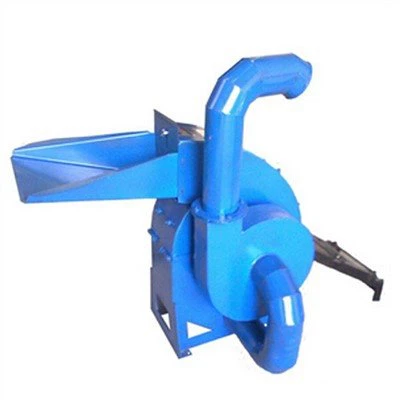


Zhengzhou Lerford Machinery Equipment Co., Ltd. is one of the most reliable manufacturers and suppliers of cattle feed pellet machine in China. With abundant experience, we warmly welcome you to buy advanced cattle feed pellet machine for sale here from our factory. Quality products and low price are available.

Cattle Feed Pellet Machine
This is a machine that is mainly used for pressing different types of powder materials into solid feed pellets for cattle. Small in size and light in weight, it is especially your best choice for farms, ranches, or outdoor or wild areas with a need for work flexibility. Here is the whole introduction about the machinery.
Low barrier to entry for operation
High-Efficiency Production
Industrial-Grade Durability
Flexible power options
Efficient coarse fiber processing
Thanks to sufficient roller pressure, the system process high rations of straw and forage without the die blocking. The processing of crop straw waste into pellet feed brings down the cost of forage acquisition.
Coarse Fiber Essential
The operating temperature is below 80℃, so there is no high-temperature carbonization or destruction of the fiber structure of the forage. Ruminants need coarse fibre for rumen fermentation; low-temperature flat-die pelleting maintains fibre activity and gelatinizes grain starches, thus enhancing digestibility and absorption of feed.
Feed Waste is Minimized
While feeding loose mash, the cattle have a tendency to pick out the concentrates and scatter the straw/forage, which means a lot of loss. On the other hand, each pellet has a consistent mix of roughage, concentrates, and nutritional supplements, which guarantees balanced nutrition and also prevents selective feeding.
Enables Storage of Straw and Forage
You can mechanize massive amounts of straw after the fall harvest, then pellet it. They may be stored for more than six months in ventilated conditions, as these dense pellets have minimal air gaps, thus resolving the issue of straw being wetted and rotting.
Types of machines

This flat-die pellet mill, designed specifically for cattle feed, offers a choice of power sources-electric motor, diesel engine, or gasoline engine. The electric version is suitable for farms with a stable power supply. For mountainous areas, open-range grazing sites, or outdoor locations where electricity is unavailable, the diesel and gasoline models eliminate the need for a grid connection, allowing for flexible, mobile operation. Whether for fixed indoor production or on-site outdoor processing of straw and forage, the machine consistently produces high-quality cattle feed pellets.

By replacing the flat dies made of Hardened Alloy Steel with different sizes of apertures, the machine can make cylindrical feed pellets in different diameters: 2.5 mm, 3.5mm, 4mm, 6mm, and 8mm. Moreover, the lower cutter is adjustable for the pellet length; the pellets are dense, have a smooth surface, generate very little dust, and have high dimensional stability, which means they do not crumble or break up.
Core specifications of the machine

|
Model |
Power(kw) |
Capacity(kg/h) |
Weight(kg) |
Size(mm) |
|
WSKL-125 |
3kw |
50-80 |
75kg |
640*320*750mm |
|
WSKL-150 |
4kw |
80-120 |
95kg |
640*320*780mm |
|
WSKL-210 |
7.5kw |
250-300 |
110kg |
1000*400*1000mm |
|
WSKL-260 |
15kw |
450-600 |
135kg |
1000*500*1270mm |
|
WSKL-300 |
18.5kw |
600-700 |
220kg |
1300*510*1210mm |
|
WSKL-400 |
30kw |
800-1000 |
600kg |
1500*610*1800mm |
The model selection is flexible and can match cattle farms of different sizes.
Type 120: suitable for individual cattle farms with fewer than 30 cattle;
‑150 type: suitable for 30‑80 beef cattle farms;
‑260 type, 300 type: for medium-sized ranches with more than 100‑300 heads;
The whole machine supports customization and can be combined with a mixer, straw crusher, and screening machine to form a complete set of simple cattle feed production lines.
What raw materials are used in the application?

Our feed pellet machine is compatible with a wide range of raw materials, primarily crop stalks, forage grasses, and agricultural by-product residues.
Crop stalks: Corn stalks, peanut vines, sweet potato vines, wheat straw, rice straw, soybean stalks
Forage grasses: Alfalfa, Chinese wild rye (Leymus chinensis), ryegrass, cogon grass, hay powder
Agricultural by-product residues: Distillers' grains, soybean curd residue (okara), beet pulp, sugarcane bagasse, rice husks, peanut shell powder, palm shells
Our pellet machine is very simple to operate, requiring only a few steps:
Initial preparation: First, shred the corn stalks, peanut vines, and forage grass to a length of 3–5 mm. Then, mix these with corn, soybean meal, wheat bran, premix, and salt according to the formula.
Control the moisture content of the raw materials; the optimal moisture level for the stalk-based mixture is 16%–18%. If the moisture is too low, the pellets will be loose and brittle; if it is too high, they will clump together and become prone to mold.

Feed the mixture into the hopper, allowing the material to enter the compression zone between the flat die and the rollers.
The rollers continuously rotate and press against the material, generating an operating temperature of 60–75°C through friction. This frictional heat causes the starch in the feed to gelatinize and the forage fibers to soften and intertwine; the material binds together using the natural adhesiveness of its own fibers, eliminating the need for added binding agents.

Under high pressure, the material is forced through the holes of the flat die, extruding cylindrical feed pellets.
What are the targets of the application?
By simply swapping out wear-resistant flat dies with different aperture sizes, this flat-die feed pellet machine can produce pellets in a wide range of specifications; it is suitable for feeding young poultry, pigeons, various ornamental birds, freshwater fish, chickens, ducks, geese, rabbits, pigs, sheep, cats, dogs, and large livestock such as beef cattle.

Unique design, key features
In order to keep the machine stable and secure during operation in the linear field, we have taken the following structural design:
The drive shaft has a dual bearing arrangement, which in turn is subjected to higher axial and radial loads, and the rigidity of the structure is also increased.
The unit has a clutch, enabling holders to quickly disengage power in an emergency, enhancing operational safety.
Both the flat die and the roller shells are produced from high-quality, wear-resistant alloy steel, for extended service life and less downtime. As a direct factory product with no middleman, the equipment is highly cost-effective.
There are different models. Up to 700 kg/h production capacity.
Sizes for pellets: 2.5 mm, 3 mm, 4 mm, 6 mm and 8 mm; you can choose the one that fits your needs.
|
|
|
|
|


Similar machines
Livestock and poultry feed pellet mills, fish feed pelletizers, and biomass pellet machines, etc. We offer equipment solutions for small family farms, medium-sized livestock and biomass enterprises to large multi-user facilities, addressing a wide range of pellet production applications.

Biomass Pellet Machine

Pet Food Pellet Machine

Feed Pellet Machine
This pellet line is customizable from a small basic model up to a fully automatic large-scale capacity. Lerford can customize the equipment based on your farm size.

II Complete Production Process: Raw material grinding → Batching and mixing → Material screening → Moisture adjustment → Pelleting and pelletizing → Pellet cooling → Finished product storage and packaging.
Showcase of Success Stories
Lerford flat-die pellet mills have achieved widespread success among livestock farmers and small-scale feed processing plants across the globe. Thanks to their versatility-featuring multiple power options, interchangeable die apertures, and adaptability for use as standalone units or within complete production lines-these machines can accommodate diverse power supply conditions, raw material types, and livestock species, serving customers in regions such as Russia, Ghana, India, Venezuela, and Brazil.


Why Choose Lerford?

3,000 m² standardized production facility
16-member technical R&D team
Comprehensive range of flat-die pellet mills, fish feed machines, and biomass pellet mills
Multiple power options: electric motor, gasoline engine, diesel engine, and PTO
Customizable die hole sizes (2.5–8 mm)
Full-load factory testing
2-year warranty on the entire machine
Long-term supply of wear parts
Remote technical support
Exported to over 130 countries
|
|
|
|
|


FAQ

Q1: What die hole size should I choose for my cattle?
Q2: Which power source should I choose if the power supply is unstable or if there is no mains electricity at the pasture?
Q3: How do I choose between a standalone machine and a complete production line?
For large-scale farms (over 100 head) or commercial feed production: A full production line is recommended, including grinding, conveying, mixing, pelletizing, cooling, screening, and bagging.
Q4: How long can the finished feed pellets be stored?
Q5: What are your equipment warranty and overseas after-sales policies?
Hot Tags: cattle feed pellet machine, China cattle feed pellet machine suppliers, factory, Feed Pellet Line