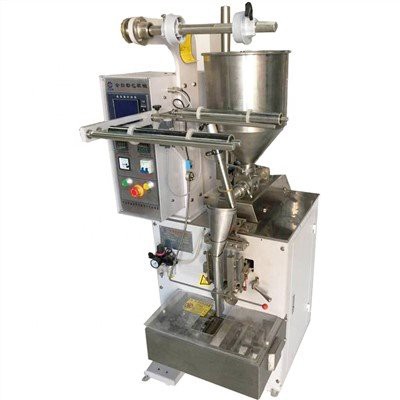


Zhengzhou Lerford Machinery Equipment Co., Ltd. is one of the most reliable manufacturers and suppliers of chalk making machine in China. With abundant experience, we warmly welcome you to buy advanced chalk making machine for sale here from our factory. Quality products and low price are available.
What machine is this?
A chalk making machine is specialized equipment designed to automatically process raw materials-such as gypsum or calcium carbonate-into finished chalk products of various shapes, colors, and sizes. Thanks to a comprehensive and extensive range of specifications and models, this type of equipment is capable of meeting the unique requirements of diverse production environments.

Chalk Machine Specifications

| Degree of Automation | Model | Capacity (pcs/h) | Overall Dimension (mm) | Weight (kg) |
|---|---|---|---|---|
| Manual | FM400-1 | 2000~4000 | 530×380×340 | 28 |
| FM800-1 | 6000~8000 | 660×480×360 | 58 | |
| Automatic | FM800-2 | 8000~12000 | 1400×1150×760 | 230 |
| FM800-4 | 12000~24000 | 1760×1150×760 | 350 | |
| FM800-6 | 24000~32000 | 1760×1150×760 | 480 | |
| FM800-8 | 32000~48000 | 1480×1480×560 / 1400×1150×760 | 650 | |
| price(USD) | $1200 | |||
|
"Model type, ocean freight, and wooden crating-these three cost components fluctuate quite a bit. So the number you see on the page? That's essentially just a deposit for the equipment itself. Want to figure out the real final landed cost? Talk directly to our sales team. They'll break it down for you based on real‑time rates: for example, wooden crating is priced by actual dimensions, and some ports require a fumigation certificate-that adds to the bill too. The sales team will give you an accurate quote with a full line‑item breakdown." |
||||
Cost‑effective to the bone
Many of our customers recoup the entire investment within three to six months of two‑shift operation. If you're looking to boost income and scale up processing, this is one of the safer bets on the floor.
Cyclic operation design
stations rotate instead of shuttling back and forth. That kills deadhead travel time. Result? Smoother workflow, higher actual output per shift.
Dead simple to run
A half‑day walkthrough for your guy on the floor, and he's good. No need for a dedicated technician – which directly trims your labor overhead.
Multi‑station layout
That's where the real speed kicks in. Compared to a single‑station rig, you're looking at easily double the shots per hour. No idle waiting.
Why It Is Worth Buying a Chalk-Making Machine
Production capacity? It scales. From a single‑machine home workshop cranking out a few hundred kilos a day, all the way up to a fully automated line feeding tons into bulk bags. You name the throughput, we've tuned a configuration for it.
Structure is tight, dimensions are optimized. Uncrate it, level the feet, plug in power – you're making product within the hour. No complicated rigging or calibration.
Consistency batch after batch. That means less raw material going into the reject bin. Most operators see yield rates north of 97% once they dial in the mix.
Versatile? It'll run white, colored, dustless teaching chalk, even industrial markers. Each type has a different margin – teaching chalk moves fast, industrial chalk pulls higher price per kilo. Mix and match to maximize profit.
Built like a tank. The wear parts (molds, shafts) last through millions of cycles. So your maintenance bill stays low – maybe a set of seals and a lube check every season.
What materials are applicable?
Raw material compatibility? Broad and forgiving. The system works with inputs that are cheap, easy to source, and already sitting in most local supply chains. No exotic ingredients, no long-lead procurement headaches.
This setup runs across all models in the FM400 and FM800 series – so whether you're starting small or scaling up, the material flexibility stays the same.
Here's what you'll typically feed into it:
Hemihydrate gypsum powder – the backbone of most chalk formulas
Calcium carbonate – improves hardness
Talc powder – adds smoothness and release properties
Auxiliary ingredients – the secret sauce (varies by batch)
Clean water – nothing fancy, just no mud or salts
Color powders/pigments – for anything from pastel to industrial marking
Binders/additives – hold the mix together, control setting time
Anti-slip additives – critical for dustless and teaching chalk
Need to know if your specific mix will run? Or want a custom formulation sheet? Contact us directly – we'll test compatibility and send back a solution tuned to your feedstock.

Finished Product Showcase
Is the chalk coming off our chalk making machine? It's not just clean‑looking-it's repeatably, measurably better. We run precision‑ground molds, not the off‑the‑shelf dies that wear out after ten thousand cycles. That gives you a stick with true dimensional consistency: straight walls, flat ends, a surface so fine you'd think it was burnished. Now, the hardness question-get it wrong, and you're either squeaking across the board or sweeping up crumbles. We've dialed the formula to a narrow tensile range where breakage drops sharply, but the writing stays buttery, no drag. Color payoff is dense and even batch after batch, whether it's standard white, bright colored, or dustless. Speaking of dustless: the real trick isn't eliminating dust entirely-it's controlling particle size so what little comes off falls straight down instead of floating into the breathing zone. Wipes clean with a dry cloth, zero residue. And because our yield rate runs consistently high, you're not paying for shattered sticks hidden inside the box. From a wholesaler's or exporter's perspective, that matters-port inspectors flag broken chalk, and overseas buyers reject smeary, inconsistent lots. Ours can clear those bars without drama.

How does it work properly?
A chalk-making machine is an automated casting device that transforms gypsum slurry into uniform, fracture-resistant chalk through the precise control of the water-to-gypsum ratio, vacuum suction casting, an intermittent rotary table, and low-temperature, slow drying.

In which scenarios can this be applied?

Large-scale production of teaching chalk (white/colored), dustless chalk, industrial marking chalk, art chalk, and more.
What are the main core features?

-
Multi‑station rotary design
efficiency isn't about muscle. It's about rhythm.
-
Model range covers it all
from hand‑crank to full auto. Pick what fits your wallet and your volume.
-
Dead simple to run
a newbie ships product in half a day. No need for a high‑priced tech.
-
Not picky about materials
feeds on gypsum or calcium carbonate. Switch between white, colored, dustless, or industrial marking chalk on the same machine
What are the reasons for choosing Lerford?
Technology leadership? they mean our automatic one-shot ejector cuts demolding time nearly in half, keeping yield north of 97%.
One-stop solution means you can start with a manual rig and scale to a fully automated PLC line
Flexible production isn't a buzzword-switch from thin-margin white chalk up to 4,000 sticks per hour.
Low total cost of ownership
Response time ≤1 hour? Send a WhatsApp video, get an answer within the hour, plus a one-year warranty that really kicks in during the first 30 days of hand-holding.
 |
 |
 |
 |
Summarize
Our chalk-making machine is a multi-station, cyclical system capable of producing four different product types on a single unit. It is so user-friendly that a complete novice can master its operation in just half a day, and it requires a mere 12 square meters of space to get up and running. Ranging from manual to fully automated configurations, the machine's production pace scales precisely to match your output demands.

FAQ
How many pieces of chalk can your chalk making machine actually produce in a single day? Please don't just give us theoretical figures.
,It depends on the specific model and the machine's cycle rate. For the FM400 series (manual models), a skilled operator working a single 8-hour shift can produce between 4,000 and 5,000 pieces. For the FM800 fully automated line-again, based on an 8-hour shift-production consistently ranges from 25,000 to 32,000 pieces. Why the fluctuation? Because the drying time is not factored into the machine's operational cycle; your drying oven's turnover capacity is actually the bottleneck. We have conducted actual field tests: the complete cycle-including slurry injection, solidification, demolding, and re-injection-takes between 45 and 60 seconds. You can do the math yourself: 60 cycles per hour, producing 800 pieces per cycle, yields a theoretical maximum of 48,000 pieces. However, in practice, you must account for auxiliary tasks-such as swapping trays, cleaning screens, and replenishing raw materials-so you should discount that theoretical figure by about 20%. Don't put your faith in those vendors claiming production rates of 50,000 pieces; those figures represent "dry run" data obtained by completely excluding all necessary auxiliary time.
Do we strictly have to use gypsum powder as the raw material? Is it possible to use calcium carbonate instead?
Yes, that is possible, though the resulting texture and feel will differ. Gypsum powder (calcium sulfate hemihydrate) solidifies rapidly upon contact with water-allowing for demolding within 2 to 5 minutes. The resulting chalk is relatively soft and writes very smoothly, making it ideal for educational use. Calcium carbonate (specifically "heavy" calcium carbonate) does not solidify on its own; it requires the addition of a binding agent (such as PVA or starch glue). This extends the solidification time to over 10 minutes, but the resulting chalk is harder and more wear-resistant, making it commonly used for industrial marking purposes. In terms of practical operation, switching between these raw materials on the same machine does not require changing the mold itself; however, you must adjust two specific parameters: the water-to-solids ratio and the vacuum level. For gypsum powder, the water-to-gypsum ratio is typically around 0.6 to 0.7; for calcium carbonate, the liquid-to-solids ratio needs to be slightly lower-otherwise, the mixture will be too thin to properly adhere to and fill the mold cavities. Regarding the vacuum level: for gypsum powder, a setting of 0.6 to 0.7 bar is sufficient; however, for calcium carbonate, the vacuum must be pulled to over 0.8 bar to ensure proper compaction. A common mistake made by beginners is failing to adjust the vacuum level when switching raw materials-the result is a batch of chalk riddled with honeycomb-like air pockets.
Is the operation of the machine difficult? Could the workers I plan to hire-even those with limited formal education-learn how to use it?
Absolutely. We have encountered and successfully handled even the most extreme cases: for instance, a client in Yunnan province whose workers had not even completed primary school and possessed very limited literacy skills. The control panel features just four buttons: Green (Start), Red (Stop), Manual Grouting, and Manual Demolding. The icons are designed to resemble traffic lights. We provided the operator with an A4 sheet illustrating the steps: 1. Press Green; 2. Wait for the light to flash three times; 3. Pull out the material tray. Within two days, he was able to operate the machine independently. The difficult part isn't the operation itself, but the formulation. You have to teach him how to judge the consistency of the slurry-by inserting a chopstick, pulling it out, and observing the slurry as it drips slowly downward; it should form a continuous stream without breaking or clumping. This requires a certain "feel," but with a week of practice, one can master it. Don't expect the worker to understand the chemistry of gypsum; you simply need to tell him, "If it's too thick, add more water; if it's too thin, add more powder," and he'll be able to adjust it correctly.
Is the machine prone to breaking? What kind of routine maintenance is required?
The most vulnerable components aren't the motors, but rather the molds and the ejector pins. The molds feature precision-drilled holes; over time, using gypsum slurry causes scale to build up inside them. Every two weeks, you must dismantle the molds, soak them in dilute hydrochloric acid, and then use a soft brush to clean out the holes. If you neglect this step, the inner walls of the holes will become rough, causing the surface of the chalk to be scratched or roughened during the demolding process. As for the ejector pins, perform a dry run (without material) every day before starting production; use a feeler gauge to measure their height, and adjust them if the deviation exceeds 0.2 millimeters. Misaligned ejector pins are the leading cause of broken chalk sticks. Another consumable part is the rubber scraper blade, which typically needs to be replaced every three months at a cost of just over ten yuan. The motors and vacuum pumps should function reliably for three to five years under normal use, but you absolutely must pair them with a voltage stabilizer-given the fluctuating voltage in rural power grids, I've seen far too many instances where the frequency inverter gets burnt out.
Hot Tags: chalk making machine, China chalk making machine suppliers, factory, Home Made Machine