

With an increasing population and a growing global demand for food, the agricultural sector has been under pressure to increase productivity and efficiency. Agricultural mechanization has been identified as one of the ways to address this problem. One of the machines used for agricultural mechanization is the wheat thresher. A wheat thresher is a machine used to separate wheat grains from chaff, stems, and other debris.
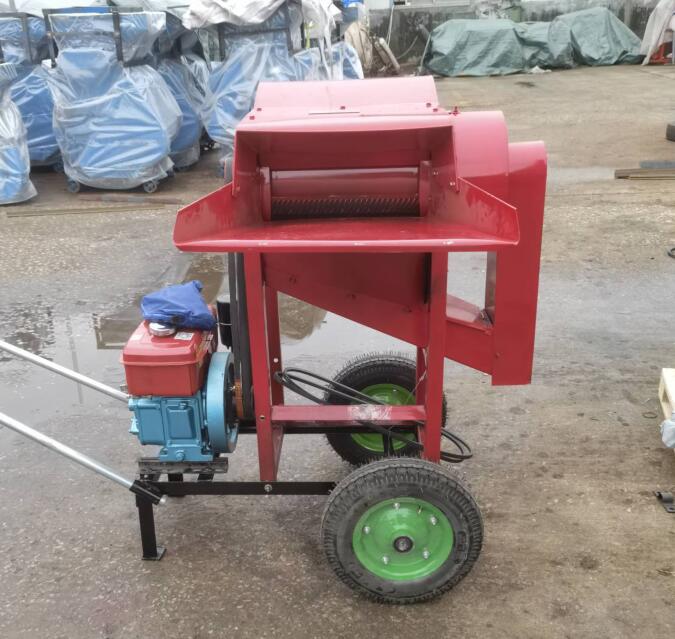
Wheat threshers work by separating wheat grains from chaff and other debris through a series of mechanical processes. Usually, the machine is powered by an electric motor or tractor engine. The wheat is fed into the machine through a funnel on top of the thresher. The grains are then separated from the chaff and other debris, which are discharged through an outlet at the rear of the machine.
There are different types of wheat threshers, each with its own unique working principle. One of the most common types of wheat thresher is an axial thresher. This type of thresher uses a series of grids or perforated plates arranged in rotating cylinders. As the cylinder rotates, the wheat head rubs against the plate, separating the grain from the chaff and other debris. The separated grain then falls through the plates into the collection trough, while the chaff is discharged through an outlet at the rear of the machine.
Another type of wheat thresher is a hammer mill thresher. This type of thresher uses a high-speed rotor fitted with a hammer to beat wheat straw onto a perforated plate. The grain is separated from straw and other debris, and the chaff is discharged through the outlet.

Advantages of wheat thresher:
1. Increased productivity: Wheat threshing machines help increase farm productivity by automating the process of separating wheat grains from chaff and other debris. The machine can process large quantities of wheat in a short time, reducing the time and labor required for manual threshing.
2. Improve efficiency: The wheat thresher has high efficiency and very little grain loss during the threshing process. The machine can also be adjusted to thresh different types of wheat without damaging the grain.
3. Reduce labor costs: Using wheat thresher, farmers do not need to thresh manually, thereby saving labor costs. The machine can also be operated by a single person, reducing the need for a large amount of labor.
4. Better grain quality: The wheat thresher produces high-quality grain with little damage to the grain during the threshing process. The machine can also remove foreign objects such as stones and sticks from grain.
Application of wheat thresher:
1. Agriculture: Wheat thresher is mainly used for threshing wheat and other food crops on farms. The machine can also be used for threshing other crops, such as peas, beans and sorghum.
2. Commodity grain processing: Wheat thresher can also be used by commercial grain processing enterprises to process a large amount of wheat. The machine can be used to separate the grain from the chaff and other debris, and then clean the grain to remove foreign matter.
3. Agricultural education: The wheat threshing machine can also be used in agricultural education to train students on the principle of threshing. This machine can be used to demonstrate different types of thresher and how they work.
Wheat threshers are an invaluable tool for farmers and agribusinesses as it helps increase productivity, increase efficiency, reduce labor costs, and produce high-quality grains. There are different types of wheat threshers, each with its own unique working principle. The machine can be used in agriculture, commodity grain processing, and agricultural education to train students in threshing principles.