

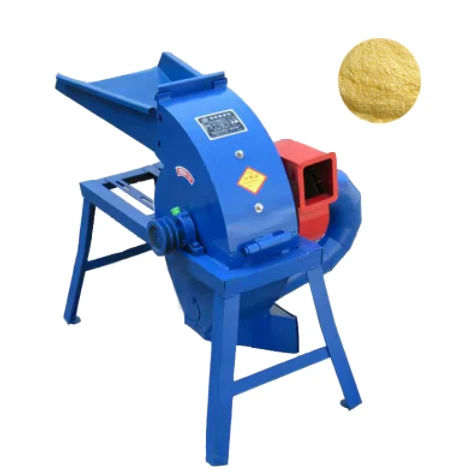
I. Tooth-and-Claw Mill (also known as a Universal Disc Mill)
1. The Inner Structure and Grinding Principle of the Machine
Main parts: Rotating toothed disc, stationary toothed disc, thickened cast-iron body, replaceable aperture screen and small blower fan (small models have no fan).
Working logic: motor cause rotating toothed disc to rotate in high speed; teeth hit material furiously to stationary disc. Material is constantly impacted, crushed and ground by the friction of the two layers steel teeth, and then, when the material size reaches the bottom screen size, it locates the bottom screen as discharging.
Screen controls the granularity: fine powder with small holes, coarse particles with large holes, no screen for coarse crushing.
The whole set-up is simple and has a few components; the toothed disc and the screen can be swapped out in as little as 10 minutes.

2. Model specifications for power and output (Commercial standard models)
1) Small scale single 220V (2.2kW/3kW/4kW)
Made for individual farmers and small feed processing shops; output range of 100–300kg per hour; small footprint; portable (wheel mounted).
2) Medium-scale three-phase 380V (5.5kW/7.5kW)
For small cooperatives; 400–800 kg output per hour. Ultra lightweight compact base - NO permanent foundation necessary.

3. Applicable Materials (Recommended applications)
Dried grains/legumes: Corn, sorghum, paddy rice, wheat, soybeans, soybean meal, wheat bran;
Dry Short Stalk/Straw: Dry rice straw, dry peanut vines, hay pieces (must be dried thoroughly);
Small-run grinding of Traditional Chinese Medicine (TCM) herbs and dry spices.

4. Advantages
Cheap cost: the initial purchase price is about 30% less than that of hammer mills throughput-wise;
Compact and lightweight: operates on standard 220V household electric power, which makes it the first choice for individual farmers in rural areas;
Simple maintenance: employs standard, commonly accessible teeth and screens; the components are inexpensive, and customers can change them without the aid of a specialist;
High fineness of grinding: is capable to make much finer powder than other mills with same size aperture screen, and is highly recommended to prepare high-quality feed for piglets and chicks;
Low energy consumption: efficient for small batch processing.
5. Significant drawbacks
Sensitive to moisture and long fibre material: stalks, fresh grass, long cotton stalks with moisture >15% block up the screen and cause the machine to stop, with cleaning required often;
Severe reduction in throughput with coarse-fiber or abrasive materials: jamming at the inlet is commonly caused by feeding whole bales of long dry hay or stalks;
Low feed rate: not suitable for continuous bulk feed; needs feeding slowly and steadily in small batches, which is inappropriate for assembly line continuous production;
Moderate wear resistance: grinding of sandy or hard substances wear quickly on the grinding teeth;
Weak buit-in Fan and generate high dust: needs to be equiped with a cyclone dust collector.
II. Hammer Mill (Livestock farm and feed mill model)
1.1 Structure and Principles of Work
1.1.1 Principle of Grinding The main parts of the feed hammer mill are: the frame, the rotating elements (a diesel or electric motor drives the rotor, which has on it a number of feeding hammers of high manganese steel), and the fixed elements (the behing lining, and toothed plates). Main parts of the machine rotor shaft with several rows of swinging hammers made of high manganese steel, toothed impact plates, built-in high-powered suction fan, and cyclone dust collector, big feeding hopper. Operation: The material is repeatedly hammered by dozens of hammers rotating at high speed, and the impact breaking is also helped by the toothed plates (floating plates) installed on the inner shell. A strong integrated air driven fan generates a vacuum at the rear of the unit to pull the material through the unit then either into collection bags or the cyclone collector. It's about airflow: Nothing accumulates on the screen itself, and this significantly minimizes chances of clogging. inversible: Hammers may be turned over and used on the reverse side before being changed, increasing usability. 2. Model Specifications, Power and Output 1) Small single-phase hammer mill (3–4 kW): Hour output of 200–500 kg
3. Suitable Raw Materials (Wide Application) Adapted for Versatile Use in Products Various grains: Corn, cereals, oil cakes, soybean meal; Long-stalk/high-fiber substances: Peanut vines, corn stalks, wheat straw, cotton stalks, hay bales; Industrial Raw Material With Moisture Content Light, semi-dry materials: Agricultural raw materials with the moisture content of 18% or less; It can be connected to a production line, feeding ground material directly to mixers and pellet mills to make a complete feed processing system.

4. Highlights
Does not clog or block and remains stable: The strong power fan embedded in the machine continually sucks in the material, in the process it makes sure the steady feeding of huge quantity of stalke and long forage without piling up, uninterrupted production for 8-12 hours is guaranteed;
More options to raw material; processing performance of long straw and coarse-fiber materials is much higher than that of tooth-claw type mills;
Wear resistant and long duration: High manganese steel hammer is impact resistant which can reduce the damage when crushing materials with little soil or stone;
The negative-pressure dielectric integrated dust collector has excellent dust removal effect, low dust generation and high dust discharge efficiency, and it can be used with automated production line;
5. Major Disadvantages
Higher purchase price the upfront cost is a lot higher than that of other machines with the same power rating;
Large designs are inoperable in individual homes because they require a 380V industrial power supply, too high for three -phase electricity systems in many countries;
It is big and heavy, thus it is hard to transport; it is usually for application under a fixed factory condition;
At the same power, the grinding fineness is a little lower than that of the tooth-claw mill; the production of extremely-fine feed need a very small size aperture screen, and the output will reduce drastically by doing so;
Complex internal structure, which leads to more time for disassembly, cleaning and maintenance.
IV. No Compromise Model Selection: Choose What is Right for You

Choose the Tooth-Claw Mill if one or more of the following applies to you:
Small-scale farming:10–50 pigs or a few hundred chickens/ducks, output of daily feed processing is a few hundreds of kilograms;
Major raw materials are dry maize, paddy rice or soybean meal; long stalks processing is minimal;
A fine powder is necessary when feeding chicks, piglets, or young ones;
Because you aren't at a fixed location needing to move the machine frequently;
You either have budget constraints, or you value inexpensive and maintenance-free.
Tip to prevent problems: Don't use a tooth-claw mill and you process large whole bales of cornstalks or wet forage, your screen will become clogged constantly and you will be forced to stop work.

Select the **Hammer Mill** if one or more of the following situations apply:
Commercial farming: Based on cattle, sheep, pigs numbers over hundreds, poultry tens of thousands, their daily feed grinding is more than 1t;
Long stalks, peanut vines, corn stalks or other high-fiber forage is the primary raw material;
Long-interval operation (or working as post of production line with conveyor and feed pellet machine);
The raw materials could not been dried in the sun completely and there is some semi-dry material inside;
To run a forage-processing workshop for others in the forage-processing business, with varied raw materials and high output.