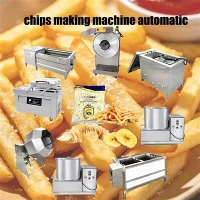


At LERFORD, our potato washing machines are designed to streamline your workflow while preserving product quality.
Potato washing machine Technical Specifications:
| Model | Capacity (kg/h) | Power (kW) | Weight (kg) | Dimensions (mm) |
|---|---|---|---|---|
| GMGR-800 | 700 | 1.1 | 180 | 1580×850×800 |
| GMGR-1000 | 1000 | 1.5 | 220 | 1780×850×800 |
| GMGR-1200 | 1200 | 1.5 | 240 | 1980×850×800 |
| GMGR-1500 | 1500 | 2.2 | 260 | 2280×850×800 |
| GMGR-1800 | 1800 | 2.2 | 280 | 2580×850×800 |
| GMGR-2000 | 2000 | 3.0 | 320 | 2780×850×800 |
Potato washing machine show
Here's a step-by-step breakdown of how our machines deliver fast, thorough cleaning with minimal effort:
1. Pre-Operation Setup
Model Selection: Choose from our GMGR series based on your production needs (see specs below).
Customization: Configure brush types (soft/hard bristles) or add modules like peelers or sorting conveyors.
Power & Water Connection: Ensure a stable 380V power supply and connect the water inlet (if using wet cleaning mode).
2. The Cleaning Process: 4 Key Stages
Stage 1: Loading & Initial Scrubbing
Potatoes are fed into the hopper manually or via conveyor.
Rotating nylon brush rollers (8–13 rods, depending on model) gently agitate and scrub the surface, dislodging dirt, mud, and thin skins.
Stage 2: Continuous Deep Cleaning
Dry Cleaning Mode (Default):
No water is used. Brushes remove debris through friction, ideal for pre-stored potatoes.
Adjust roller speed via the control panel to balance scrubbing intensity and throughput.
Wet Cleaning Mode (Optional):
Integrated spray nozzles mist water to soften stubborn dirt.
Wastewater is filtered and recycled, cutting water use by 70%.
Stage 3: Debris Removal
Dislodged dirt falls through gaps between brush rollers into a collection tray.
A built-in vibration system prevents clogs, ensuring uninterrupted operation.
Stage 4: Discharge & Sorting
Cleaned potatoes exit via a variable-speed conveyor.
Optional add-ons:
Size Grading: Integrate a sorting belt to separate potatoes by diameter.
Peeling Check: Add an inspection window for quality control.
Why Food factory & Processors Choose LERFORD
ROI-Driven: Most users recover costs within 1 year thanks to reduced labor and water bills.
Built to Last:
304 Stainless Steel Frame: Resists rust and corrosion.
Food-Grade Nylon Brushes: Durable, non-toxic, and replaceable in minutes.
Flexible Scaling: Start with the GMGR-800 (700 kg/h) and upgrade as your business grows.
From muddy harvest to market-ready spuds, LERFORD's potato washers handle it all-efficiently, reliably, and profitably.
Ready to upgrade your operation?