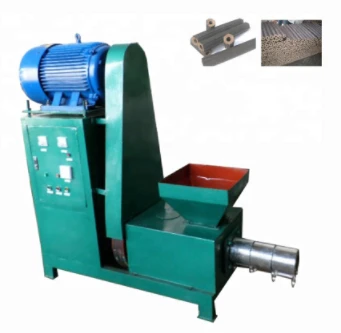


So we finally shipped that RX-50 to Argentina. May 18th, Lerford sent it out after the usual final inspection and a pretty serious moisture-proof packing job-full wooden crate, vacuum sealed, all that. It's in a container now, on its way to Santa Fe Province. A cooperative down there plans to use it for turning wood shavings and leftover crop stuff into fuel briquettes.
The Machine's Operating Mode
They use this machine: collect ag waste, make biomass fuel, supply heat to local facilities. With this machine, they think they can close the loop completely-from waste to clean heat.

What makes the RX-50 work for South America
Lerford didn't just grab a machine off the shelf. They changed a few things for Argentina. Summers are hot and humid. The feedstock is usually eucalyptus or pine sawdust, plus corn stalk powder. And most small to medium plants don't have great infrastructure.
The motor is 22 kW and can handle voltage swings (380–415 V ±15%), which is good because rural grids aren't always stable. It's got overload protection and extra cooling. The pressing is two-stage: hydraulic pre-compression, then mechanical main compression. That setup works even if the material moisture is between 14% and 22%, which happens a lot when you haven't dried things thoroughly. Density comes out at least 1.15 g/cm³, and crush strength is over 85 N. That meets Argentina's IRAM 3527 standard for Class A biomass fuel.

Real output, not just marketing numbers
We declare 400 kg per hour continuous. Not peak, not just for a few minutes. That number came from an actual test with 60% eucalyptus sawdust and 40% corn stalk powder, particle size under 2.5 mm, at 32°C and 75% humidity. There's an AI feed control and real-time infrared temp/pressure feedback, so the machine adjusts spindle speed and die cavity temperature on its own. That keeps the ring die from warping or clogging when it's hot out.

Machine-Related Parameters
The whole thing is 1.6 m long, 0.65 m wide, and 1.7 m tall. Takes up just over one square meter. You can put it in a farm shed, next to a grain dryer, or even on a mobile trailer. Weight is 700 kg, center of gravity below 55% of its height, so it's stable. Comes with rubber feet and four M14 anchor points. No need for a concrete foundation.
Maintenance is pretty simple. The ring die, roller gap, and bearing grease are all accessible through a front door. You don't have to take panels off. A regular tech can do a full service in about half an hour.
That South American moisture-proof packing
Lerford built this one for humid climates. The crate is 18 mm pine (FSC certified), lined inside with 0.2 mm food-grade PE film on all six sides, then nitrogen flushed and heat sealed. There's a breather valve on top so pressure doesn't build up during shipping and burst the film. Inside there's an electronic humidity logger (0–100% RH, ±2% accuracy) and a little visual indicator card, so you can track the whole shipping environment.
|
|
|


Summarize
More than a machine-a local fuel system
This RX-50 is going to a processing center near Rosario. On the input side, it'll take sugarcane bagasse, pruning branches, and sawdust from soybean processing. On the output side, the briquettes will go to a dairy plant's boiler and community heating stations. At full capacity, the cooperative expects to use about 200 tons of ag waste a year, produce 180 tons of fuel briquettes, replace roughly 65,000 liters of diesel, cut carbon by over 160 tons annually, and create four local green jobs.
One of the Lerford guys put it this way: "In Argentina, we're not just selling a machine. We're delivering something that can start making fuel and turning a profit right away. The RX-50 is just the engine."
|
|
|
|