



Introduction to the Vertical Colloid Mill
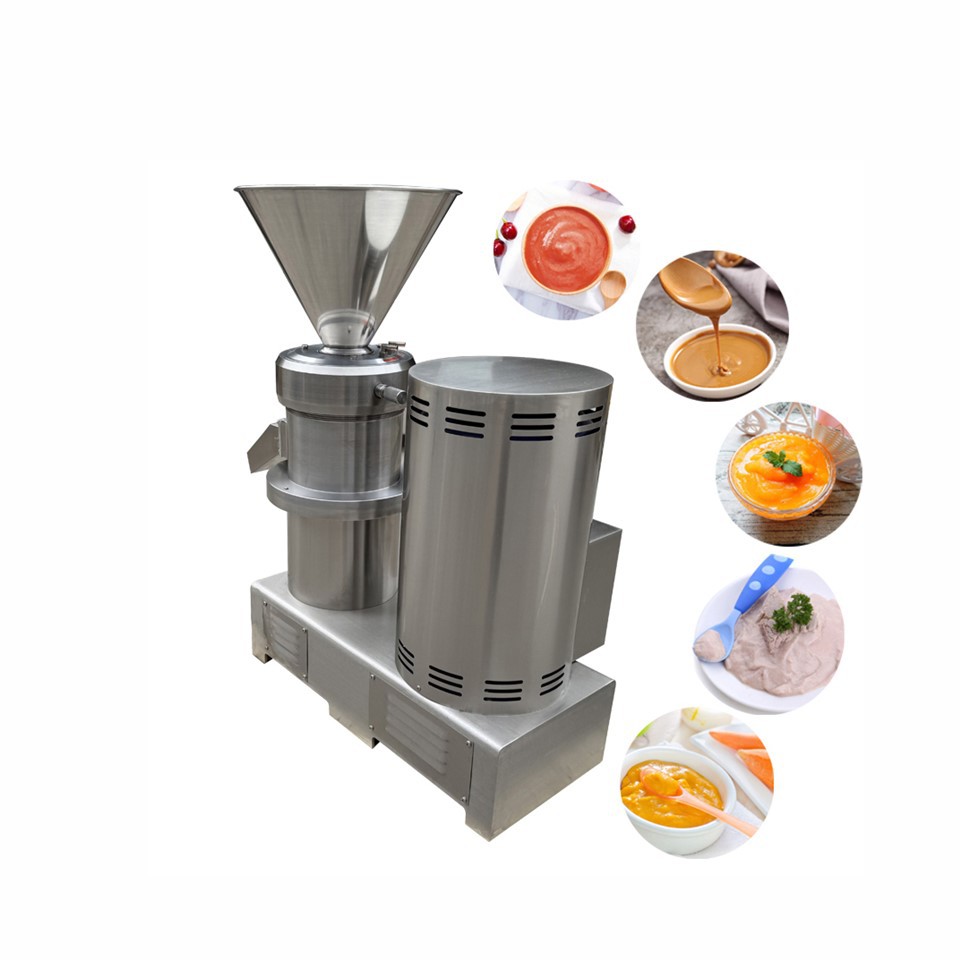
The colloid grinder is a highly efficient device specifically designed for the fine grinding of fluid or semi-fluid materials-primarily used to process raw ingredients such as peanuts and sesame seeds into a fine, smooth paste. Acting much like a "super pulverizer," it brings about a fundamental transformation in the texture of the processed materials.

Why is a colloid mill worth purchasing?
Assurance of Health and Quality
Slow-speed grinding preserves the natural aroma and nutritional content of the nuts.
Enhanced Efficiency and Flexibility
Utilizing a low-speed grinding process, our machines preserve the natural aroma and nutritional integrity of the nuts. Pure, natural, and free of additives.
Convenience and Peace of Mind
Simple to operate, the machine significantly reduces labor costs and long-term maintenance expenses.
High Cost-Effectiveness and Rapid ROI
Small-scale commercial machines require a modest initial investment yet generate a rapid return.
Machine Types and Specifications

|
Model |
WSS-50 |
WSS-80 |
WSS-110 |
WSS-130 |
WSS-180 |
|
Output size |
50-100 mesh |
50-100 mesh |
100-200 mesh |
100-200 mesh |
100-200 mesh |
|
Capacity (kg/h) |
10-15 |
30-70 |
150-200 |
300-500 |
800-1000 |
|
Power |
1.1kw |
4kw |
7.5kw |
15kw |
22kw |
|
Dimension (mm) |
530*260*580 |
640*410*900 |
700*430*980 |
830*440*1100 |
830*490*1100 |
|
Weight(kg) |
50 |
150 |
175 |
285 |
340 |
|
EXW price ( stainless steel ) |
$1590-$4290 |
||||
Our listed machine prices are strictly ex-works – no tax, no freight.
What do you actually end up paying? That depends on a handful of variables most people don't think about upfront: your exact location (port city vs. inland town – huge difference), how many kilometers the truck has to roll, whether you want it by sea, air, or rail, and – this one catches many off guard – the local tax policies at your delivery address, which can vary from region to region.
Seen it happen time and again: two customers ordering identical machines, yet their final landed costs differ by 20% or more, simply because one is near a major port with a bonded warehouse, the other is deep inland with complicated last-mile logistics.
What materials can this be used with?
This isn't merely simple "grinding"-we are talking about ultra-fine pulverization, emulsification, and homogenization, all accomplished in a single pass.
Whether the material is fluid, semi-fluid, or paste-like... as long as it possesses flowability or creep properties, this machine can handle it with ease.
It boasts comprehensive processing capabilities, capable of handling raw materials ranging from legumes, fruits, and vegetables to grains.
What about high-viscosity materials? This is often a challenge that leaves most equipment stumped, yet this machine handles it effortlessly.

How does this machine work?
A vertical colloid mill processes materials through the combined actions of shearing, grinding, and high-speed agitation. The grinding process is achieved through the relative motion of two inclined disc-shaped surfaces: one rotates at high speed while the other remains stationary, thereby subjecting the material to immense shear and frictional forces, which in turn facilitate highly efficient grinding, emulsification, crushing, and dispersion.
What is the scope of application for this machine?
Curious to know exactly which fields rely on the colloid mill to play a truly indispensable role? Let me take you on a closer look.
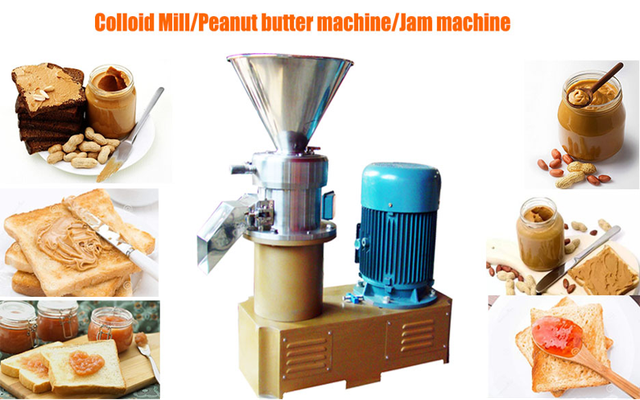
First up is the food industry-that's right, products like peanut butter, ketchup, and chili sauce. But here's the key: its function goes far beyond mere grinding. If the gap between the rotor and the stator is off by even the slightest margin, your peanut butter will end up with a gritty texture-or worse, suffer from oil-water separation. As for ketchup? What you need is a smooth, fine consistency characterized by "shear-thinning" flow properties. Without a colloid mill, achieving any of this would be simply impossible.

Next, let's turn to the chemical sector: paints, coatings, lubricants, adhesives, and synthetic leather. While the range of applications appears vast, the core objective remains constant-to break down agglomerated particles and ensure the stability of the mixed system. I've seen instances where people attempted to bypass the colloid mill, opting instead to rely solely on high-speed mixers. The result? It simply didn't work. More often than not, after sitting overnight, the mixture would inevitably settle and stratify.

Furthermore, industries such as plastics, textiles, papermaking, and rare earths also represent key application areas for the colloid mill. Although these fields may be less widely known, their importance cannot be overlooked. This is particularly true in the rare earth industry; without the ability to precisely control particle fineness, the purity of downstream products simply cannot be guaranteed.
The Structural Composition of the Machine
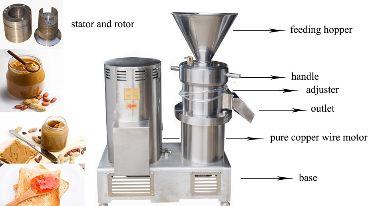
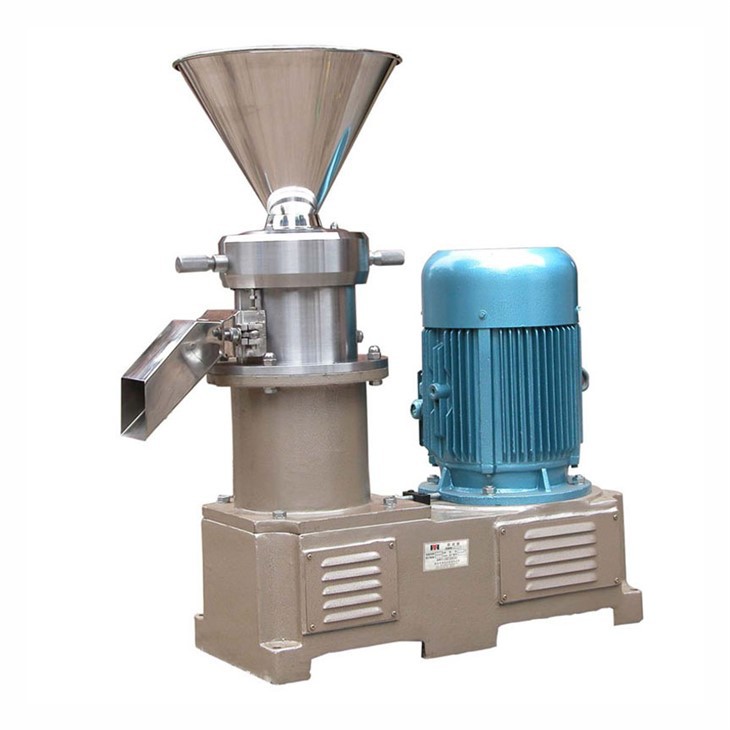
This colloid mill grinder consists of six core components: a feed hopper, an adjustment mechanism (handle), a grinding core (stator and rotor), a discharge outlet, a pure copper motor, and a base. Each component serves a distinct function and works in synergy to achieve the fine grinding and discharge of materials.
Performance Features
1. Vertical, integrated design for maximized space utilization
2. High-precision grinding core offering superior fineness control
3. Fully stainless steel, sanitary-grade construction compliant with food and pharmaceutical standards
4. Stable and durable power and sealing systems
5. Multi-purpose functionality with a high degree of system integration
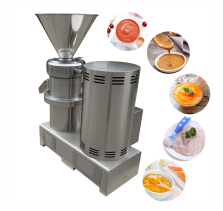
Competitor Comparison
Our pricing is perfectly aligned with the tangible quality and robust materials we employ, ensuring that every dollar you spend is utilized with maximum efficiency, never a penny wasted. We are committed to transparent pricing and a direct correlation between cost and quality; every cent you pay translates directly into the superior performance, longevity, and user experience of our equipment. Below, I will briefly list a few points:
Difference 1
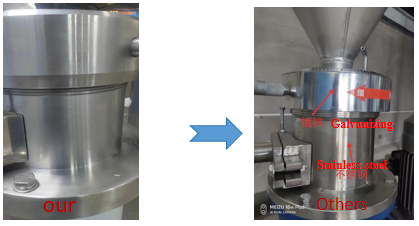
All of our machines are constructed from 304 stainless steel.
Competitors' products utilize galvanized carbon steel, a critical component in their machines.
Our rotors and stators are crafted from thickened, high-hardness stainless steel-first heat-treated, then precision-machined via CNC. We do this for one sole purpose: to ensure they remain free from deformation and premature wear, even under heavy loads. And what about cheaper machines? They skimp on both the steel grade and the material thickness. The result? They fail to grind finely, break down constantly, and leave you utterly frustrated with the endless cycle of replacing parts.
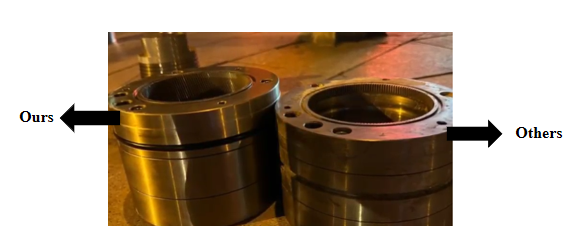

Our entire unit is constructed from genuinely thickened stainless steel, and every weld point has undergone meticulous grinding and polishing, leaving the seams completely invisible. The result is an appearance that is both clean and high-end, entirely free of any hard-to-clean crevices; this gives food manufacturers complete peace of mind when using it.
Why Choose Lerford?
First and foremost, we make absolutely no compromises regarding the core components of our vertical colloid mills. In the procurement of raw materials, we consistently adhere to the highest standards.
Secondly, our structural design takes full account of actual production environments.
Third, with deep roots in the field of mechanical equipment manufacturing, we possess mature R&D and production expertise, and we are intimately familiar with the needs of both domestic and international users.
Fourth, we provide comprehensive pre-sales selection guidance, installation and commissioning support during the sales phase, and robust after-sales technical support, ensuring you can purchase with confidence and operate with peace of mind.
Fifth, our equipment offers lower long-term operating costs.
While our initial price quote may not always be the lowest, when you look at the total cost of ownership, factoring in minimal downtime due to malfunctions, low frequency of spare parts replacement, and stable grinding efficiency-the value becomes clear. Many of our customers' machines are still running strong after five or six years of use, whereas cheaper alternatives often become obsolete or suffer a drastic decline in performance within just two or three years.
One final note: We don't sell mere window dressing. If you wish to conduct an on-site material test, simply bring your materials to us, and we will fire up the machine to demonstrate its capabilities firsthand. We let the actual data speak for itself-covering fineness, throughput, and temperature rise.

Common Problem
Q: Your machines seem more expensive than those from other suppliers. What justifies the higher price?
Expensive? Let me break down the costs for you. Our motors feature pure copper windings from top-tier brands; our grinding discs are made of extra-thick, high-hardness stainless steel that has undergone rigorous heat treatment and precision machining; and the machine body itself isn't flimsy sheet metal-it is constructed from solid, cast stainless steel. These material costs are substantial and undeniable. We invest every single penny into tangible features that you can see with your own eyes, feel with your own hands, and verify through years of reliable operation.
Q: How is after-sales support guaranteed? Who do I contact if the machine breaks down?
We denounce with righteous indignation and dislike men who are so beguiled and demoralized by the charms and demo data been dummy tndustry dard righteous
Q: Your machines seem more expensive than those of your competitors-what justifies the higher price?
Expensive? Let me break down the costs for you. Our motors feature pure copper windings from top-tier brands; our grinding discs are made of extra-thick, high-hardness stainless steel that has undergone rigorous heat treatment and precision machining; and the machine body itself isn't flimsy sheet metal-it is constructed from solid, heavy-duty cast stainless steel. These material costs are substantial and undeniable. Every single penny you spend is invested in tangible quality-features you can see with your eyes, feel with your hands, and verify through the test of time.
Q: How is after-sales support guaranteed? Who do I contact if the machine breaks down?
To be honest, with equipment built from such robust materials, the failure rate is inherently very low. Once our equipment is sold, most customers go two or three years without even needing to replace the mechanical seals. Furthermore, we maintain a year-round inventory of common wear parts (such as seals and spare grinding discs), so you won't have to wait for imports or custom manufacturing. Simply put, after-sales support isn't just a slogan to us; it means that when you're rushing to fulfill orders at two o'clock in the morning, there will be someone available to answer your call and tell you exactly which screw needs tightening.
Hot Tags: vertical colloid mill, China vertical colloid mill suppliers, factory